
Visen : Redefining Inclusive Transport for Everyone
Disclaimer: All information in this case study reflects reflects my role in product strategy, design decisions, and cross-functional collaboration, without revealing any sensitive internal data.
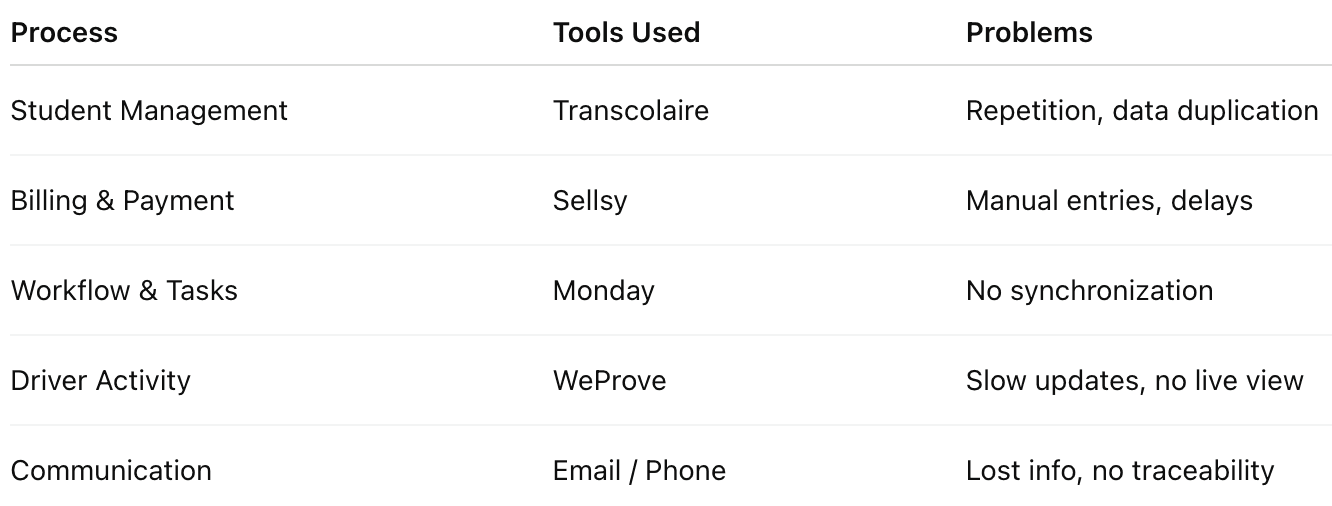
In 2007, Visen began as the initiative of a parent whose child had reduced mobility. Struggling to find reliable transport, they created a small system to help children reach schools and care centers. Over time,Visen grew into a national network but by the late 2010s, the platform had become fragmented across multiple tools such as Transcolaire, Sellsy, Monday, and WeProve. Office staff spent hours transferring data between systems, approvals took weeks, and drivers, students, and parents faced delays, miscommunication, and limited visibility.
Confidential
Mobility Tech
Product design
April 2026
Discovery
My mission? Redesign Visen into a centralized, modular, and inclusive ecosystem that ensures reliability, transparency, and accessibility for every user.
Understanding the Problem
Through on-site observation of office staff, drivers, and families, I uncovered five major pain points:
Fragmented workflows: Staff relied on 5+ systems to manage similar tasks.
Slow approvals: Each update required multiple validation steps.
Limited visibility: Parents and drivers lacked real-time trip information.
Manual route planning: Routes were inefficiently planned by hand.
Accessibility gaps: The platform didn’t fully support children with reduced mobility.
Research & Insights
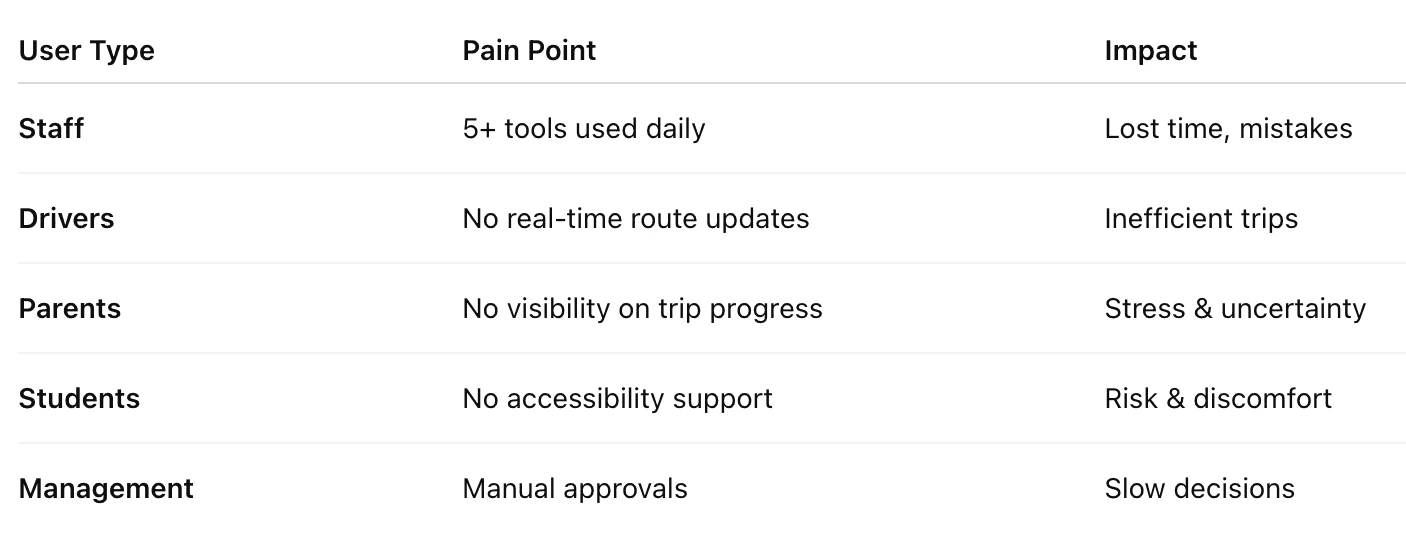
Interviews, surveys, and field observations revealed frustration across all user groups:
Staff spent hours re-entering repetitive data.
Parents expressed anxiety about their children’s journeys.
Drivers needed dynamic routes that adapted to real-time changes.
Students with mobility challenges required personalized support.
“If staff, drivers, and parents are struggling with the same system, how can we design one that truly works for everyone including children with special needs?”
Problem Framing
Fragmentation was the root cause behind inefficiencies and miscommunication.
We reframed the challenge as:
How might we design a unified, multi-role platform that simplifies workflows, enhances coordination, and ensures inclusive, real-time transport for all users?
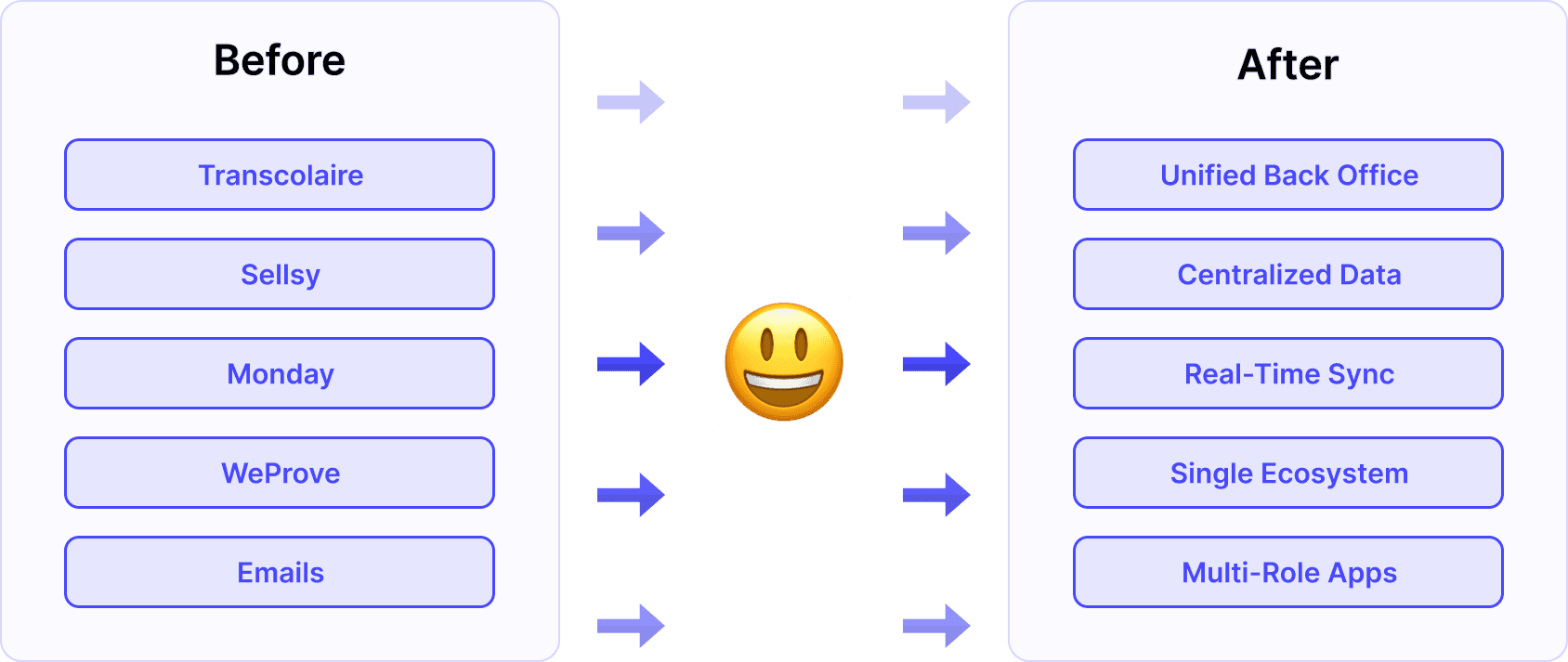
The Solution: A Multi-Ecosystem Platform
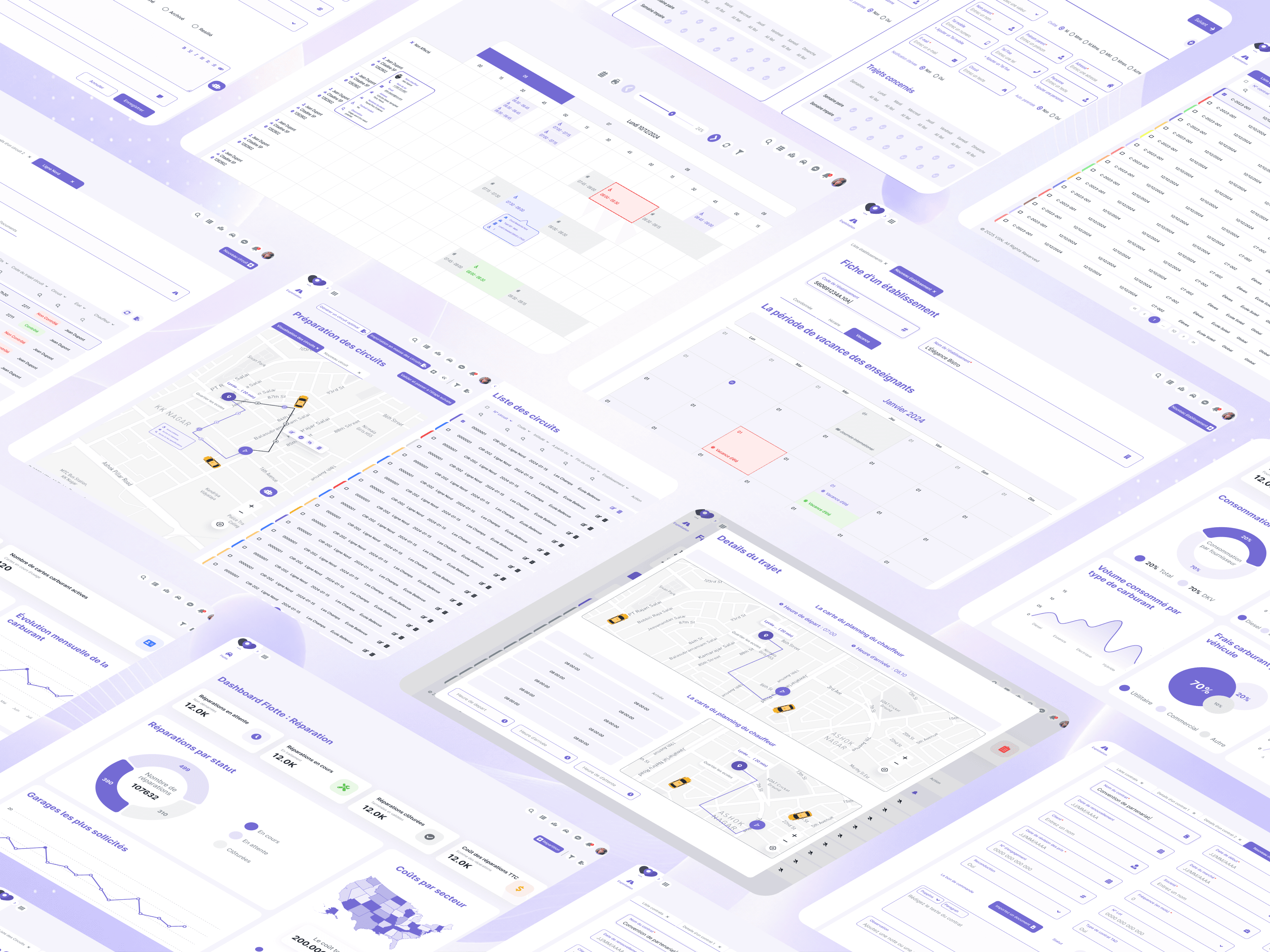
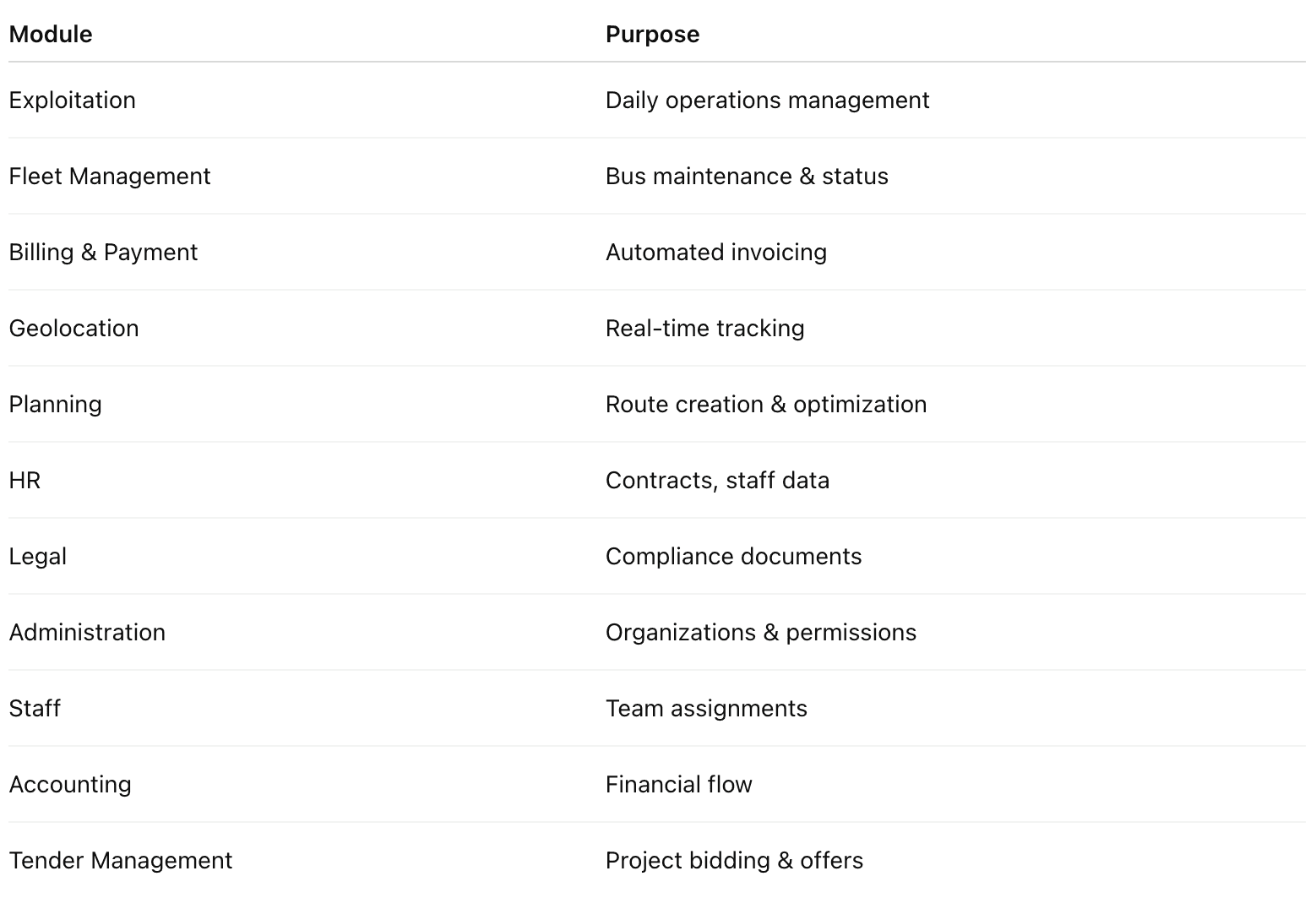
SaaS Back Office: The redesigned VSN Back Office became the central hub connecting all departments through 11 modular applications:
Exploitation, Fleet Management, Billing & Payment, HR, Geolocation, Planning, Tender Management, Administration, Staff, Accounting, and Legal.
Each module was built for scalability, enabling teams to work independently yet stay seamlessly connected.
Intelligent Automation
Automation replaced repetitive manual work and brought clarity to decision-making processes.
Smart Driver Assignment: Automatically detects and assigns the nearest available driver reducing costs, travel time, and energy waste.
Route Optimization: Analyzes real-time traffic, student locations, and schedules to plan the most efficient paths.
Dynamic Reallocation: When a driver cancels or a student is absent, the system instantly redistributes routes and notifications.
Predictive Planning: Identifies high-demand periods and recommends scheduling adjustments.
By embedding intelligent automation into core operations, we transformed VSN from a reactive system into a proactive, data-driven network.
It wasn’t about replacing people it was about empowering them to focus on what truly matters: care, safety, and trust.
(Visual suggestion: flow diagram showing data input to optimized routes.)
Mobile Ecosystem
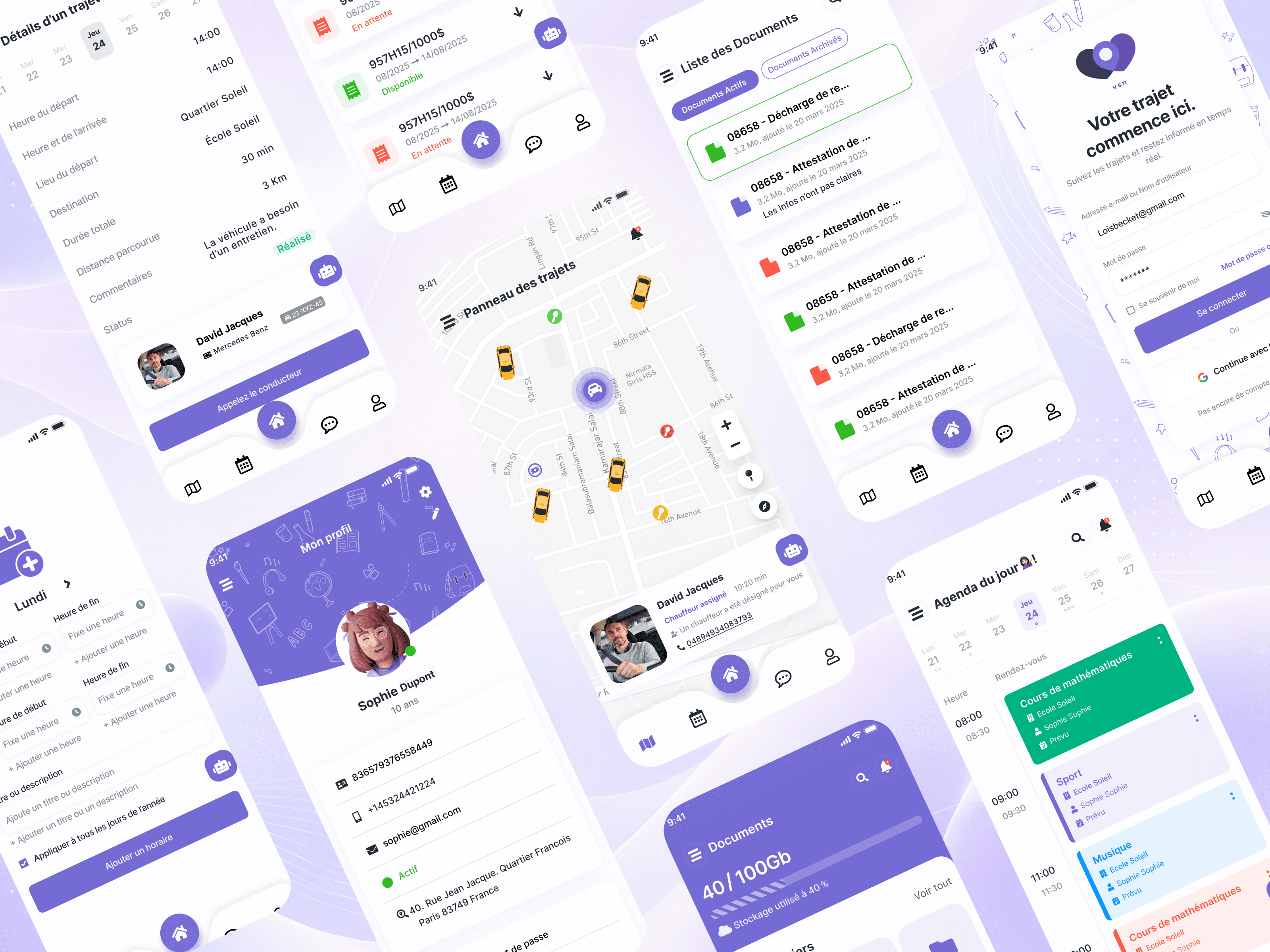
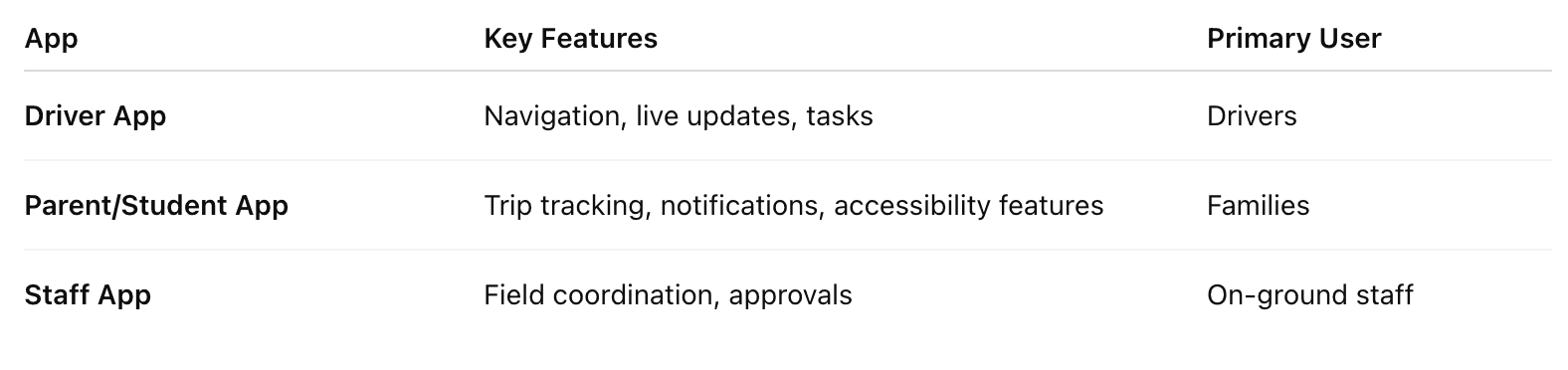
To ensure accessibility and real-time communication, three mobile apps were developed:
Driver App: Route navigation, updates, and task management.
Student & Parent App: Live trip tracking, notifications, and accessibility-friendly design.
Staff App: Field reporting, approvals, and coordination tools.
Iteration & Refinement
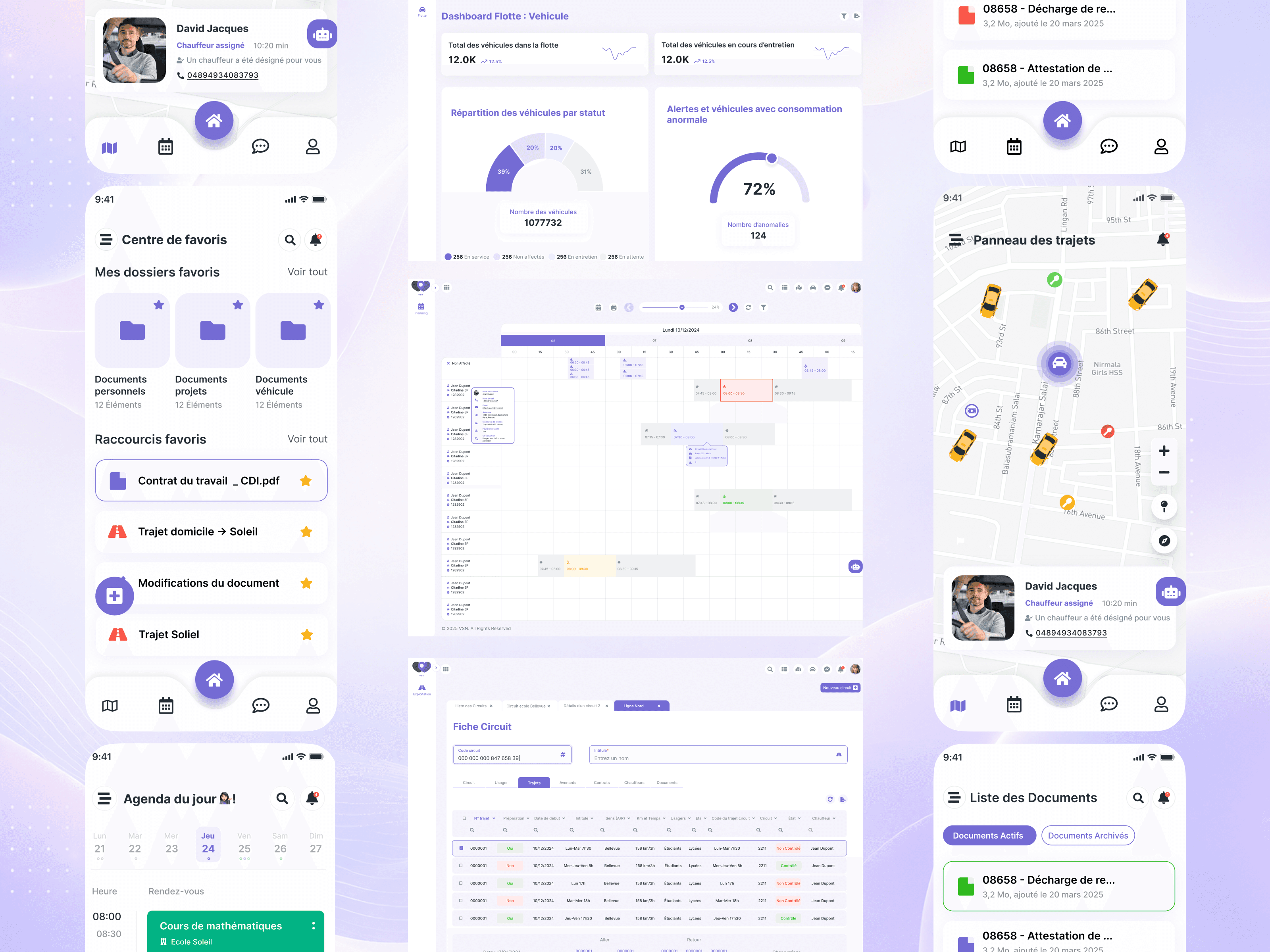
Back Office
Role-based dashboards simplified daily operations.
Real-time synchronization improved inter-department collaboration.
Automated planning reduced manual workload significantly.
Mobile Apps
Parents gained peace of mind through live trip tracking.
Drivers received optimized routes and instant updates.
Staff coordinated seamlessly from the field.
Outcomes & Learnings
The unified platform replaced scattered workflows with a centralized, scalable, and automation-driven ecosystem.
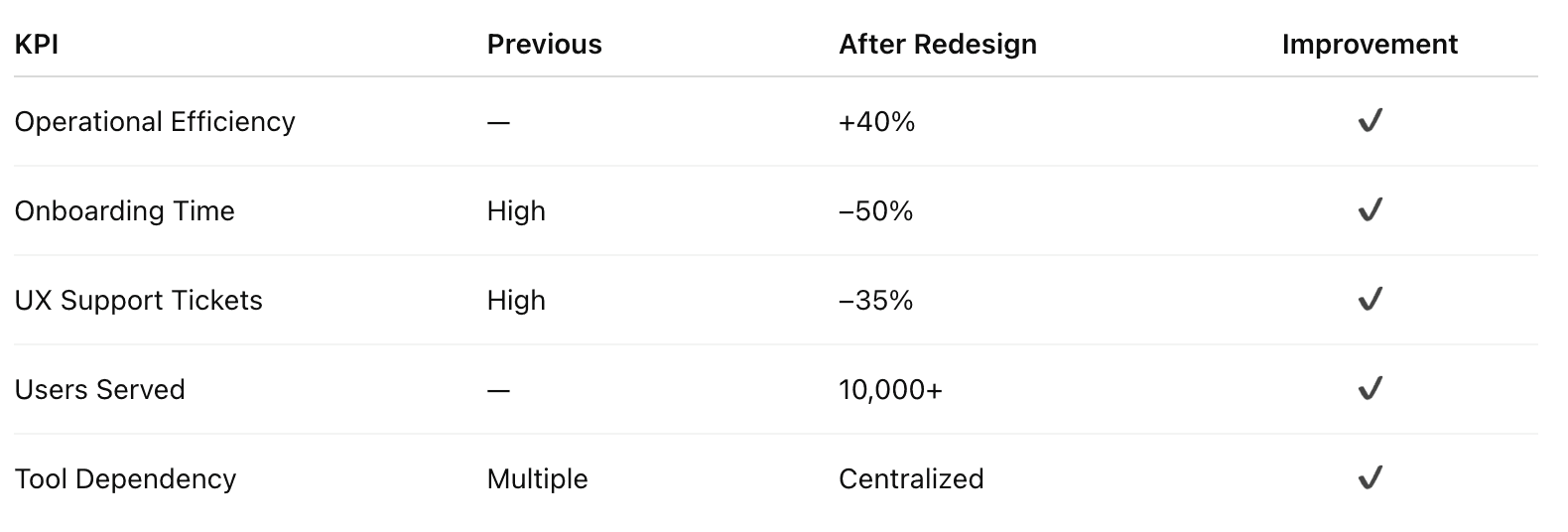
Results
Serving 10,000+ active users (staff, drivers, students, and families)
+40% operational efficiency
–50% onboarding time for new employees
–35% UX-related support tickets
Reduced third-party tool dependency
Full stakeholder satisfaction
Key Takeaways
Automation enhances human efficiency it doesn’t replace empathy
Transparent, real-time systems build trust across all user roles.
Modular UX design ensures flexibility and long-term scalability.
Designing inclusively ensures accessibility for everyone especially users with special needs.